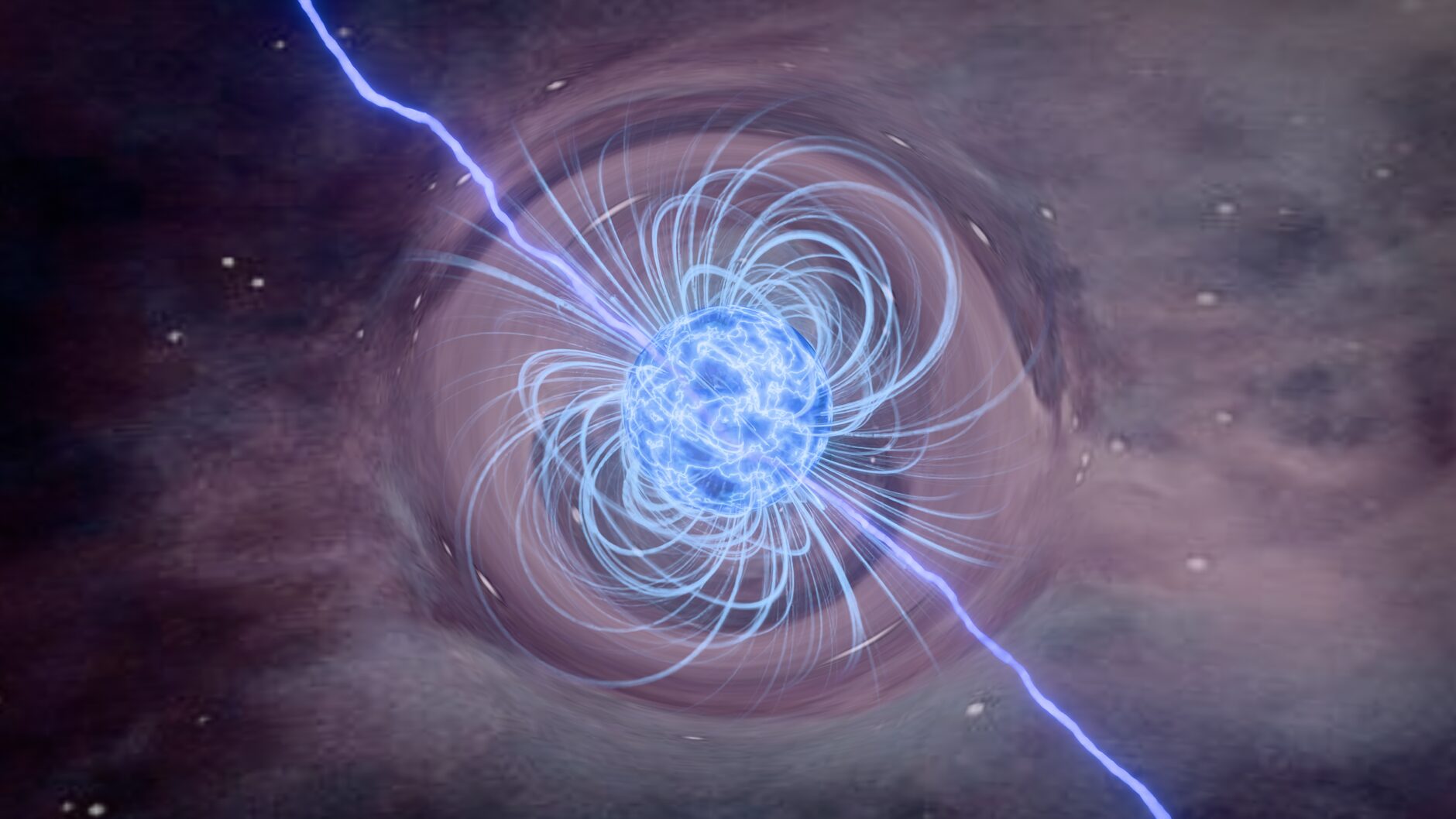
pulsar spin change has captivated astronomers as a pulsar suddenly alters its spin three times after years of silence. This unexpected behavior opens new avenues for research.
What is a pulsar?
A pulsar is an astronomical object that is a highly magnetized, rotating neutron star, emitting beams of electromagnetic radiation out of its magnetic poles. These beams are often observed as pulses of radiation, which is where the name “pulsar” originates. Pulsars are formed from the remnants of massive stars that have undergone a supernova explosion, collapsing under their own gravity to create incredibly dense objects. Their rotation can be extraordinarily fast, with some pulsars spinning several hundred times per second.
The extraordinary characteristics of pulsars make them valuable tools for astrophysics. They serve as natural clocks due to their consistent and predictable spin rates, allowing scientists to study various cosmic phenomena. Additionally, the study of pulsars can provide insights into the fundamental laws of physics, particularly in extreme conditions that cannot be replicated on Earth.
Recently, researchers observed a remarkable event where a pulsar underwent a spin change after years of stability. This unexpected alteration raises intriguing questions about the processes governing pulsar behavior and the factors that can trigger such significant changes in their spin dynamics. Understanding these phenomena is vital for unraveling the mysteries surrounding pulsars and their role in the universe.
As astrophysicists continue to investigate these cosmic enigmas, the discovery of a pulsar’s spin change highlights the ever-evolving understanding of the universe and the intricate mechanics that govern celestial bodies.
The significance of pulsar spin
The significance of pulsar spin extends far beyond mere curiosity; it holds the key to understanding fundamental physics and the behavior of exotic matter in the universe. Pulsars, highly magnetized rotating neutron stars, emit beams of electromagnetic radiation that sweep across space, much like a lighthouse. The rate at which these stars spin can reveal crucial information about their internal structure and the forces at play within them.
Recent observations have shown that changes in pulsar spin can occur unexpectedly, prompting a reconsideration of established theories. When a pulsar experiences a spin change, it may indicate various astrophysical phenomena, including:
- Mass Transfer: Pulsars in binary systems can gain or lose angular momentum through interactions with a companion star.
- Gravitational Waves: The detection of pulsar spin changes might provide insights into the presence of gravitational waves, which affect the pulsar’s rotation.
- Magnetospheric Dynamics: Variations in the magnetic field can alter the pulsar’s spin, leading to intriguing questions about magnetar activity.
The recent discovery of a pulsar that changed its spin three times in quick succession underscores the need for ongoing research in this field. Such phenomena challenge our existing understanding and highlight the complex nature of cosmic events. As scientists delve deeper into the mystery of pulsar spin change, they may unlock answers to some of the universe’s most pressing questions.
Recent discoveries in astrophysics
Recent advancements in astrophysics have shed light on the enigmatic behavior of pulsars, particularly in relation to the phenomenon known as pulsar spin change. A startling discovery was made when researchers observed a pulsar that had remained silent for years suddenly exhibiting a dramatic alteration in its spin rate, which occurred three times in quick succession.
This unexpected spin change has prompted scientists to reevaluate their understanding of pulsar dynamics. Pulsars, which are highly magnetized rotating neutron stars, emit beams of electromagnetic radiation that can be detected from Earth. The consistency of these emissions typically allows for precise measurements of their rotational periods. However, the recent findings suggest that these celestial bodies can experience significant fluctuations in their spin, raising questions about the underlying mechanisms driving such changes.
Researchers have proposed several theories to explain this phenomenon:
- Magnetic Field Interactions: Changes in the pulsar’s magnetic field may influence its spin.
- Accretion of Material: The accumulation of surrounding material could alter the pulsar’s rotational dynamics.
- Neutron Star Mergers: Interactions with other celestial bodies may lead to variations in spin rates.
As studies continue, the insights gained from observing pulsar spin change could unlock further mysteries of the universe, including the fundamental physics governing these extraordinary objects.
Understanding cosmic mysteries
The universe is filled with enigmas that challenge our understanding of physics and astrophysics. Among these, pulsars have captivated scientists and enthusiasts alike due to their unique properties and behavior. These highly magnetized, rotating neutron stars emit beams of electromagnetic radiation, and their precise rotation periods can provide insights into the fundamental workings of the cosmos.
Understanding cosmic mysteries, such as the sudden pulsar spin change, can help researchers unlock the secrets of stellar evolution and the nature of matter under extreme conditions. Pulsars are known for their stability; however, when unexpected changes occur in their spin rates, they prompt further investigation into the mechanisms driving these alterations.
Recent observations have revealed instances where pulsars exhibit sudden shifts in rotation speed, casting light on the complex interactions between magnetic fields and stellar materials. Such phenomena may be linked to factors like mass accretion from nearby celestial bodies or the effects of gravitational waves, adding layers of complexity to our understanding of these cosmic lighthouses.
As scientists continue to study these remarkable stars, they gather crucial data that may one day answer profound questions about our universe. The ongoing research into pulsar spin changes not only underscores the dynamic nature of cosmic bodies but also highlights the ever-evolving nature of scientific inquiry in the quest to comprehend the universe’s mysteries.
The technology behind pulsar observation
The observation of pulsars has significantly advanced due to the development of sophisticated technology that allows astronomers to detect and study these mysterious celestial objects with unprecedented precision. Key instruments, such as radio telescopes and space observatories, play a vital role in gathering data about pulsar spin change and behavior.
Radio telescopes, positioned in various locations around the globe, utilize large dishes to capture faint radio signals emitted by pulsars. These signals, often lost in the vastness of space, are amplified and processed to reveal valuable information about the pulsar’s rotation and magnetic field. Notably, some of the most significant discoveries have been made using the Very Large Array (VLA) and the Parkes Observatory, both renowned for their high sensitivity and resolution.
Space telescopes, such as the Fermi Gamma-ray Space Telescope, enhance our understanding by observing pulsars across different wavelengths. This multi-wavelength approach provides comprehensive insights into the pulsar’s environment and the processes influencing its spin.
Furthermore, computational advancements have enabled astronomers to analyze vast amounts of data rapidly. Techniques like machine learning are now being employed to identify patterns and anomalies in pulsar behavior, leading to groundbreaking discoveries, including the recent observation of unexpected pulsar spin change.
As technology continues to evolve, the mysteries surrounding pulsars and their spin dynamics will undoubtedly deepen, unlocking further secrets of the universe.
Implications of the spin change
The recent discovery of a pulsar spin change has profound implications for our understanding of the universe. This unexpected alteration in the pulsar’s rotational behavior challenges existing theories and opens new avenues for research in astrophysics. Scientists are now tasked with deciphering the mechanisms behind these spin changes, which could lead to significant advancements in our grasp of stellar evolution and the life cycles of neutron stars.
One of the most notable implications of the spin change is its potential impact on gravitational wave astronomy. Pulsars are known to emit beams of radiation, and any variation in their spin could serve as a precursor to more dramatic cosmic events, such as supernovae or black hole formations. Consequently, monitoring these changes may enhance our ability to detect gravitational waves and better understand the fundamental forces at play in the universe.
Furthermore, the discovery raises questions about the stability of pulsars themselves. If pulsars can undergo rapid spin changes, this may suggest they have more complex internal structures than previously thought. As researchers delve deeper into these mysteries, they may uncover new physics that could reshape our understanding of matter under extreme conditions.
In summary, the implications of the pulsar spin change extend beyond mere curiosity. They challenge existing models, enhance our observational capabilities, and encourage a reevaluation of the processes governing the universe.
Future research directions
As researchers continue to unravel the complexities of pulsar behavior, future research directions are poised to enhance our understanding of pulsar spin change phenomena. The recent discovery of a pulsar that suddenly altered its spin three times has sparked significant interest in several key areas of astrophysical inquiry.
One promising direction involves the analysis of pulsar environments. Scientists are eager to investigate the external factors that may influence a pulsar’s spin characteristics. This includes studying the surrounding interstellar medium and gravitational interactions with nearby celestial objects, which could provide insights into the pulsar’s spin evolution.
Another crucial area of research focuses on advanced observational technologies. The development of more sensitive instruments will enable astrophysicists to monitor pulsars with greater precision, allowing for the detection of subtle spin variations. These advancements could lead to groundbreaking revelations about the mechanisms driving pulsar spin changes.
Additionally, interdisciplinary collaboration between astrophysicists and theoretical physicists will be essential. By integrating observational data with theoretical models, researchers can create a comprehensive framework to better understand the implications of pulsar spin changes on fundamental physics, including the nature of gravity and the behavior of matter in extreme conditions.
As the field evolves, the ongoing study of pulsars promises to unveil profound cosmic mysteries, pushing the boundaries of our knowledge about the universe and its intricate workings.
Conclusion on pulsar behavior
In conclusion, the recent discoveries surrounding pulsar spin change have opened a new chapter in our understanding of these enigmatic celestial objects. The ability of a pulsar to alter its spin rate raises intriguing questions about the fundamental processes governing their behavior. These changes, once considered rare or even unprecedented, indicate that pulsars are far more dynamic than previously thought.
As we delve deeper into the mechanisms behind pulsar spin, it becomes increasingly clear that they may serve as vital tools for probing the cosmos. The sudden shifts in spin, as evidenced by the pulsar that experienced three significant changes, challenge existing models and suggest that our comprehension of neutron stars is still evolving.
The implications of these findings extend beyond theoretical astrophysics; they touch on the very nature of matter under extreme conditions. Pulsars, with their strong magnetic fields and rapid rotation, act as natural laboratories for studying the effects of gravity and magnetic forces at play in the universe.
Future research will undoubtedly focus on refining our understanding of pulsar behavior, especially in light of these recent observations. As technology continues to advance, astronomers will be better equipped to monitor these cosmic beacons, potentially uncovering more secrets hidden within their rapid spins.
Ultimately, the exploration of pulsar spin change not only enhances our knowledge of neutron stars but also reinforces the significance of ongoing astrophysical research in unraveling the mysteries of our universe.
Recent observations have shed light on the mechanisms behind the pulsar spin change, revealing unexpected patterns in their rotation. This pulsar spin change not only challenges existing theories but also opens new avenues for understanding the life cycle of neutron stars.
Photo by Nicola Narracci on Pexels
Sources
Related reading
- RRB Group D Answer Key: Quick Guide to Check and Raise Objections
- Asian shares climb: Is this the best time to invest?
- Understanding the Key Features of the 1xbet Official Site
About the Author