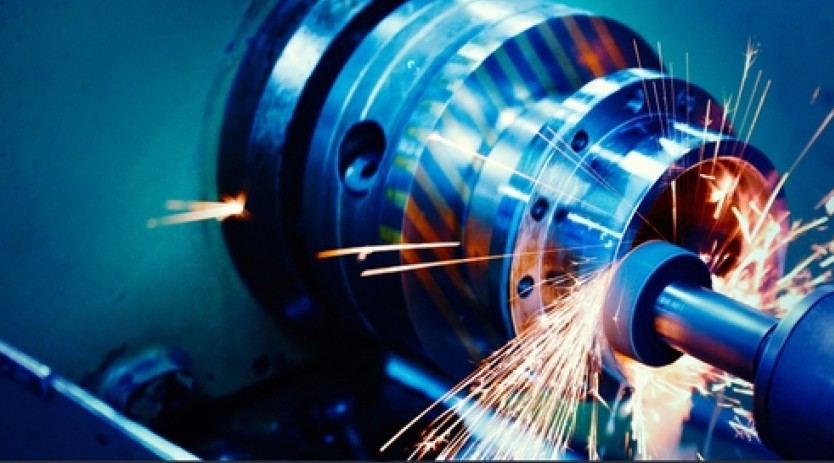
Metal injection molding (MIM) has quietly transformed how industries approach complex component manufacturing, offering a solution that bridges the gap between mass production efficiency and artisanal precision. This sophisticated process represents more than mere technological advancement; it embodies a fundamental shift in how we conceptualise the relationship between design complexity and manufacturing feasibility.
The Genesis of a Manufacturing Revolution
The story of MIM begins in the convergence of two established technologies: plastic injection molding and powder metallurgy. Like many transformative innovations, its origins lie not in a sudden breakthrough but in the patient synthesis of existing knowledge. During the 1960s, engineers recognised that fine metal powders, when combined with polymer binders, could flow through injection molding machinery much like thermoplastics, yet retain the structural properties essential for demanding applications.
This realisation opened possibilities that traditional manufacturing methods had long considered impractical or economically unfeasible. Consider the challenge of producing thousands of identical components, each featuring internal geometries that would confound conventional machining. MIM technology solutions address precisely such challenges, enabling the production of parts that would otherwise require multiple machining operations, extensive assembly, or compromise in design ambition.
The process follows a methodical progression:
- Mixing: Metal powders (typically <20 micrometres) combine with thermoplastic binders
- Injection: Feedstock flows through molding equipment, forming “green parts”
- Debinding: Polymer content removal through controlled heat or chemical treatment
- Sintering: High-temperature densification, achieving 98% of wrought material density
Singapore’s Strategic Manufacturing Excellence
Singapore’s emergence as a centre for precision metal injection molding services reflects the nation’s broader commitment to advanced manufacturing. The island republic’s strategic position, world-class infrastructure, and emphasis on innovation have created conditions where sophisticated manufacturing processes thrive. Local expertise in MIM technology benefits from Singapore’s robust ecosystem of research institutions, government support, and proximity to key markets across the Asia-Pacific.
The sophistication of Singapore’s manufacturing landscape becomes evident when examining the range of applications and materials available. As industry experts observe, “Metal Injection Molding (MIM) combines the precision of injection molding with powdered metal to produce highly complex metal components with exceptional mechanical properties.” This capability has positioned Singapore as a hub for industries requiring both precision and reliability.
Key advantages of Singapore’s MIM sector include:
- Comprehensive quality certifications including ISO 9001, ISO 13485, and IATF 16949
- Advanced research and development capabilities supporting material innovation
- Skilled multilingual workforce capable of serving global markets
- Established supply chains for speciality materials and precision equipment
- Government initiatives promoting Industry 4.0 adoption and digitalisation
- Strategic location enabling efficient distribution across Asian markets
Material Science: Expanding the Realm of Possibility
Key material categories include:
- Ferrous alloys: Carbon steels, stainless steels, and low-alloy variants for general applications
- Biomedical grades: Nickel-free stainless steel compositions for medical devices
- Superalloys: Inconel and similar materials for extreme temperature environments
- Speciality compositions: Tungsten-heavy alloys for radiation shielding applications
- Conductive materials: Copper-based alloys for electrical and thermal applications.
As one Singapore-based expert explains, “We manufacture high-density components with superior properties such as high strength, excellent magnetic permeability, good creep resistance, corrosion resistance and thermal conductivity.” This material diversity enables advanced MIM processing techniques to serve applications spanning from medical implants to aerospace components.
Industry Applications: Precision Across Sectors
Primary industry applications demonstrate MIM’s versatility:
- Medical devices: Surgical instruments with complex internal passages and biocompatible materials
- Automotive: Fuel injection systems, transmission components, and precision sensor housings
- Electronics: Miniaturised smartphone components, connector housings, and camera modules
- Aerospace: High-performance components requiring extreme temperature and stress resistance
Quality and Precision: The Foundation of Trust
In precision manufacturing, quality transcends mere compliance; it becomes the foundation upon which entire industries depend. Singapore’s MIM manufacturers maintain quality systems that encompass every aspect of production, from material verification through final inspection. Advanced metrology equipment enables measurement capabilities that often exceed customer requirements, whilst statistical process control ensures consistency across production runs.
The commitment to excellence extends beyond dimensional accuracy to encompass material properties, surface finish, and functional performance. Cleanroom environments maintain the controlled conditions essential for medical device manufacturing, whilst advanced heat treatment capabilities optimise material properties for specific applications. This comprehensive approach to quality assurance reflects the understanding that in precision manufacturing, there are no small details, only details that matter profoundly.
The Future Landscape: Innovation Continues
Looking ahead, the trajectory of MIM technology points towards increased automation, expanded material options, and enhanced precision capabilities. Singapore’s manufacturers invest continuously in advanced equipment and process development, ensuring they remain at the forefront of global manufacturing excellence. The integration of Industry 4.0 technologies promises further improvements in process monitoring and quality assurance, whilst research into new material compositions continues to expand application possibilities.
The advent of artificial intelligence and machine learning in manufacturing operations enables predictive quality control and optimisation of process parameters in real-time. These developments suggest that the next generation of MIM technology will be characterised not merely by greater precision, but by intelligent adaptation to varying requirements and conditions.
As global supply chains evolve and manufacturers seek partners capable of delivering complex components with unwavering reliability, Singapore’s position as a centre of excellence for precision manufacturing becomes increasingly valuable. Through decades of dedication to manufacturing excellence, the nation has established itself as a place where engineering challenges meet innovative solutions, ensuring that when precision and reliability matter most, Metal injection molding (MIM) continues to deliver exceptional results that push the boundaries of what manufacturing can achieve.
About the Author