Ensuring safety in elevated and complex work environments requires reliable solutions that combine protection, flexibility, and ease of use. One such solution is the Rope access Rail System, designed to provide continuous fall protection while allowing smooth mobility across challenging structures. By integrating secure anchorage with guided movement, these systems enhance efficiency and minimize risks for professionals performing maintenance, inspections, or construction tasks at elevation.
In this, we explore the key features of a Rope access Rail System and explain why it is a critical component for workplace safety.
What is a Rope Access Rail System?
A Rope access Rail System is a fall-protection solution that combines rope-access techniques with a rigid, permanently mounted rail. Unlike wire or cable lifelines, the rail provides continuous, stable support along horizontal, vertical, or curved paths. A specially designed trolley travels along the rail, allowing workers connected via harness and lanyard to move safely around obstacles without detaching.
This system is ideal for tasks such as building façade cleaning, high-rise inspections, maintenance, or industrial work. By maintaining continuous attachment, a Rope access Rail System reduces human error, minimizes fall risks, and ensures safer, more efficient operations at height.
Key Features and Advantages
Continuous, Hands-Free Movement with Safety
One of the greatest advantages of a Rope access Rail System is that it allows workers to remain attached at all times, even while moving. The system uses a rigid rail track with a trolley or gliding runner, which follows the worker’s motion without manual intervention.
Once the harness is connected to the trolley, the worker can traverse horizontally, climb vertically, or descend without detaching and re-attaching at multiple anchor points. This uninterrupted protection reduces the risk of errors and ensures safer and more efficient work at height.
Minimal Deflection Reduces Fall Distance
Compared to traditional wire lifelines, rail-based systems are rigid and do not sag. Because of this minimal deflection, in the event of a fall, the stopping distance and associated shock are much lower.
This shorter fall distance is critical when working close to the ground or over complex structures with limited clearance below. The reduced deceleration force lowers the risk of severe injury and ensures stability and reliability during fall arrest.
Adaptable Installation: Horizontal, Vertical, Overhead, and Curved Paths
A Rope access Rail System is highly versatile. The rigid rail can be mounted horizontally, vertically, overhead, or along curved or inclined surfaces, depending on the structure’s design.
This adaptability makes it suitable for a wide variety of applications, from façade maintenance and building inspection to industrial plant servicing, roof work, and confined-space access. By adjusting mounting brackets and rail geometry, the system can match the building’s architecture without compromising safety.
Multi-User Capacity and Continuous Protection Over Long Distances
Modern rail systems are engineered to support multiple users on the same rail span, making them highly efficient for large worksites where several workers need to move along the same route.
Additionally, rope access rail systems can be installed over long runs, covering entire building façades, rooftops, warehouse ceilings, or complex structures. This continuous protection across long distances ensures workers do not rely on intermittent anchor points, improving both safety and productivity.
Durable Materials and Low-Maintenance Design
Rail systems are typically built using high-strength materials such as anodized aluminium or stainless steel, making them resistant to corrosion, environmental degradation, and heavy-duty use.
The rigid design requires less frequent replacement or tensioning compared to wire lifelines. Maintenance is simpler, as damaged sections can often be replaced individually without affecting the entire system.
Typical Use Cases
Rope access Rail Systems are especially useful in the following scenarios:
- Façade maintenance and window cleaning of high-rise buildings where scaffolding or lifts may be impractical.
- Inspection, maintenance, or construction of industrial plants, warehouses, and factories where workers need to traverse long elevated work zones.
- Roof maintenance, repairs, HVAC servicing, and mechanical systems work, especially on large flat or sloped roofs.
- Confined-space access, tank or silo maintenance, railway-vehicle inspections, and overhead machinery servicing.
- Maintenance of complex architectural façades or glass-panel buildings, where scaffolding may be undesirable.
Safety and Compliance Considerations
For a Rope access Rail System to be effective:
- The system must be correctly engineered to suit the building or structure, considering load-bearing capacity, number of users, span, mounting points, and path layout.
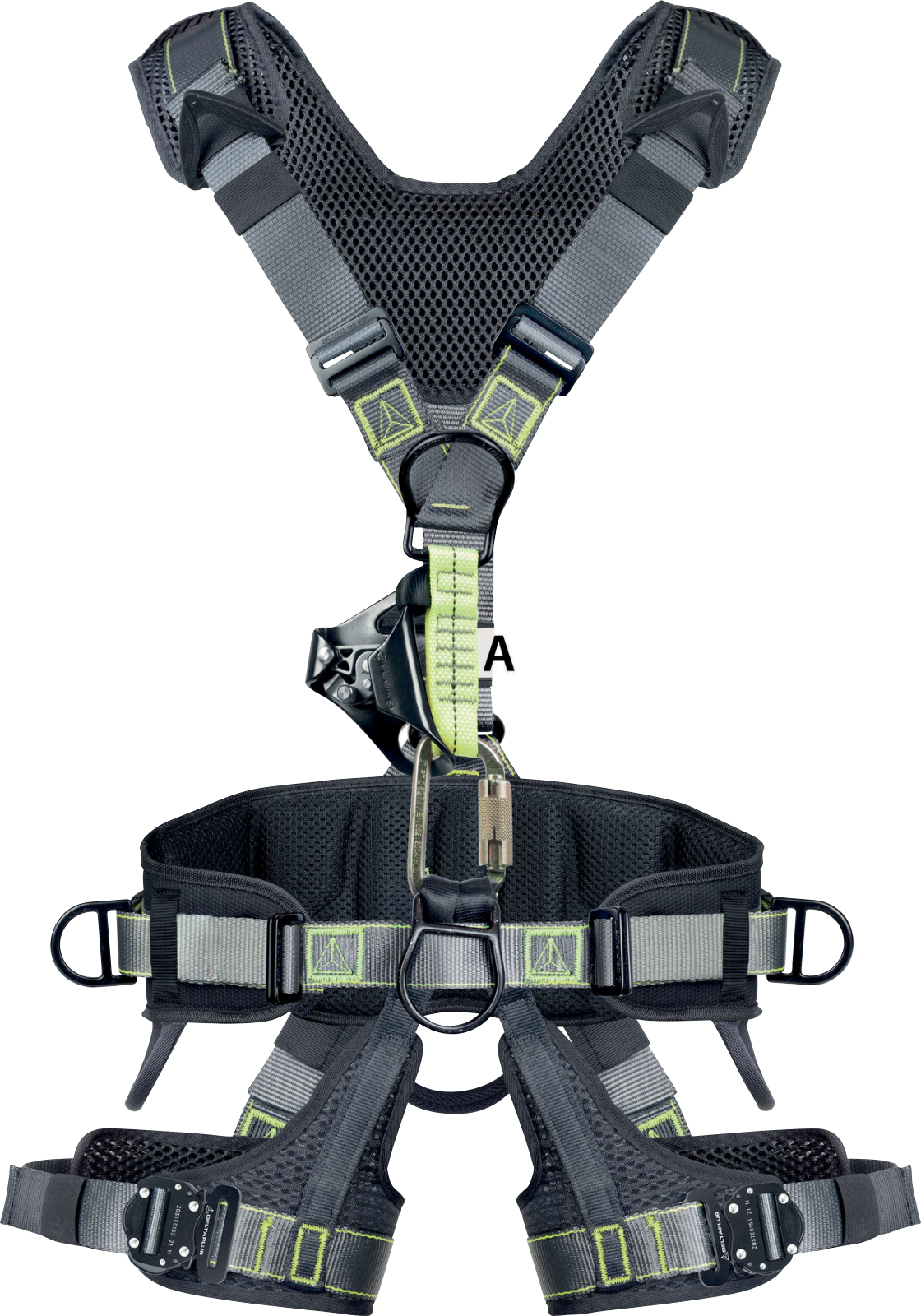
- Workers must use personal protective equipment (PPE) such as harnesses, lanyards, and fall-arrest devices that meet relevant safety standards.
- Periodic inspection and maintenance of the rail, brackets, trolleys, connectors, and harnesses are essential. Environmental factors like corrosion, weather, and chemical exposure should be taken into account.
- Proper training and competent use by workers is critical. Even the best rail system cannot guarantee safety if used incorrectly.
Why Rope Access Rail Systems Outperform Traditional Wire or Cable Lifelines
Rail-based systems offer several advantages over wire or cable lifelines:
- They minimize fall clearance because rails do not sag or stretch, reducing the distance a worker might fall.
- Fixed rails eliminate the risk of swing-fall injuries caused by sagging wires.
- Rails offer greater durability and lower maintenance since sections can be replaced individually.
- Rail installations can be discreet and aesthetically integrated with the building’s architecture, making them suitable for commercial or residential applications.
Conclusion
A Rope access Rail System provides reliable, versatile fall protection for challenging work environments. Offering continuous attachment, minimal deflection, multi-user support, and flexible installation, it ensures safety for rope-access and abseiling tasks. Ideal for façades, industrial plants, warehouses, and rooftops, it reduces fall risks, enhances efficiency, ensures compliance, and boosts worker confidence during high-elevation operations.
Delta Plus offers comprehensive fall protection solutions, including advanced Rope access Rail Systems and other safety equipment designed for high-risk environments. With a focus on quality, innovation, and compliance, their products ensure worker safety, efficiency, and reliability. Trusted globally, Delta Plus provides tailored support, training, and services to meet the unique needs of every industry.
About the Author